BWF World Tour · 2026 season
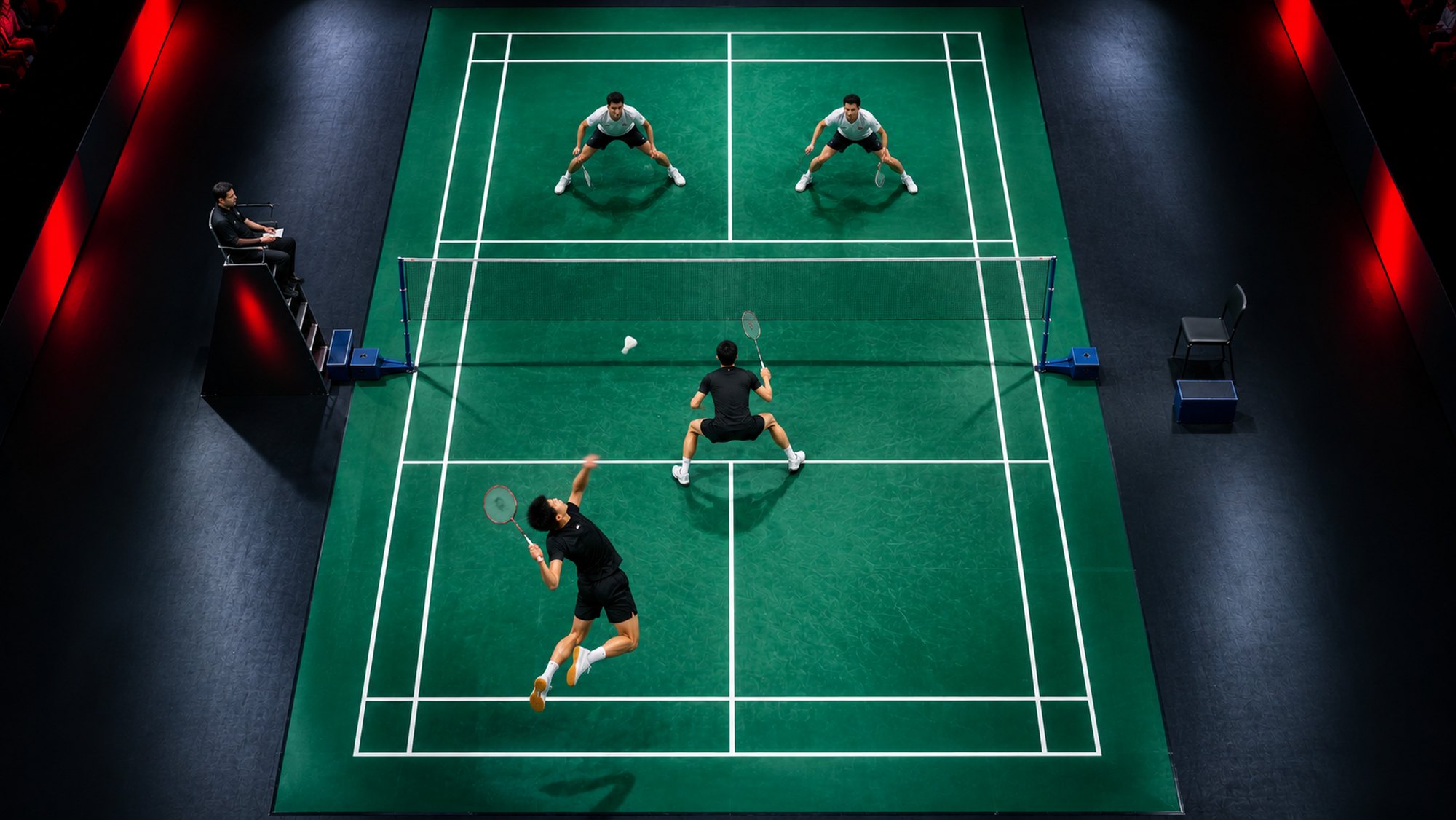
Aerial view of a doubles rally with the attacking pair front and back (AI-generated image) AI-generated image
The Sport · 04 of 06

Health benefits: what the research says

Badminton is a workout disguised as a game. The studies below are encouraging, but most show associations rather than proof of cause, so read them as good reasons to play, not promises.

Five findings

Linked to a longer life

A study of 80,306 British adults followed for about nine years found racket-sport players (badminton, tennis and squash) had a 47% lower risk of death from any cause and a 56% lower risk of death from heart disease and stroke than people who did no racket sport. It was observational, so it cannot prove the sport caused the difference.12

Real exercise intensity

The Compendium of Physical Activities rates social badminton at 5.5 METs and competitive match play at 9.0, firmly in moderate-to-vigorous territory.3 WHO advises adults to get at least 150 minutes of moderate activity or 75 of vigorous activity a week; two club nights can cover a good share of that.4

A sharper mind, for a while

In a small Japanese study of 20 students, ten minutes of badminton improved performance on a Stroop test of inhibitory control compared with sitting still, while ten minutes of running at matched intensity did not. The authors suggest the thinking demands of an open-skill sport may be part of the effect.5

People, not just exercise

A systematic review of sport and adult wellbeing found participation linked to better wellbeing, lower stress and better social functioning, with club-based sport showing stronger links than exercising alone. Most of the evidence is cross-sectional.6 A club night, with its rotating partners and chat between games, is that kind of sport.

Good for life, says the review

A 2022 systematic review of 27 studies on badminton and health concluded that playing may improve health across physical, mental and social areas, with the strongest evidence for physical health such as heart and lung function.7

Hit it twice as hard and it barely goes further. Badminton rewards timing, and timing does not retire at 40.

BadmintonAtlas

General information, not medical advice. If you have a heart condition, a joint problem or any other health condition, or have not exercised for a while, check with a doctor before you start.

Sources

7 sources for this page, checked 2 November 2026
  1. Oja P. et al. (2017). Associations of specific types of sports and exercise with all-cause and cardiovascular-disease mortality: a cohort study of 80 306 British adults. British Journal of Sports Medicine 51(10), 812–817
  2. University of Oxford, Nuffield Department of Population Health: Swimming, racquet sports and aerobics linked to best odds of staving off death
  3. Compendium of Physical Activities: Sports (badminton codes 15020, 15025, 15030)
  4. World Health Organization: Physical activity, recommendations for adults
  5. Takahashi S., Grove P. M. (2019). Comparison of the effects of running and badminton on executive function: a within-subjects design. PLOS ONE 14(9)
  6. Eime R. M. et al. (2013). A systematic review of the psychological and social benefits of participation in sport for adults. International Journal of Behavioral Nutrition and Physical Activity 10, 135
  7. Cabello-Manrique D., Lorente J. A., Padial-Ruz R., Puga-González E. (2022). Play Badminton Forever: a systematic review of health benefits. International Journal of Environmental Research and Public Health 19(15), 9077